 BirdTrout
Open the map
BirdTrout
Open the map
June Bug / Beetle (Phyllophaga spp.)
Terrestrial, hatching June–July, active in water between 58 and 75°F, and imitated at #10–14. Recorded from northern lower Michigan, southern lower Michigan and the Upper Peninsula, where 1140 Michigan rivers on this site carry a page.
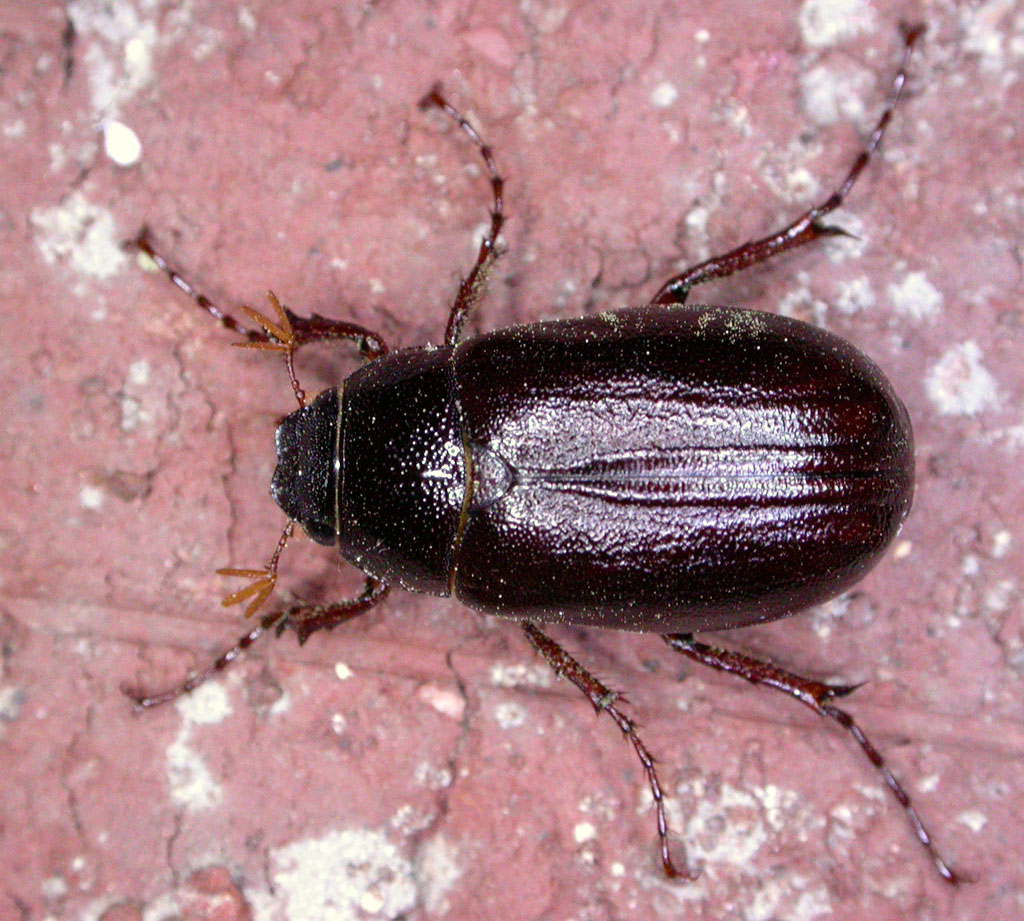

Chunky brown scarab beetles that fly clumsily at dusk in early summer and land in the water regularly — size 10 to 14 and heavier than they look. Only the adult matters: a dusk fly on tree-lined water, fished with a deliberate splash rather than a delicate one. A big clumsy beetle on a warm June evening is a mouthful worth a trout leaving cover for. The peak falls in June and July, and the active water-temperature band runs 58 to 75 degrees, which covers cold-transitional, cool and warm streams. Patterns are all bulk and float: a Foam Beetle at 12 to 18, a Chubby Chernobyl at 8 to 14, or a Stimulator at 8 to 16. The records behind this entry span northern and southern lower Michigan, the Upper Peninsula, the Wisconsin driftless, northern Wisconsin, and the Virginia and North Carolina mountains — a coarse picture of where the insect turns up, and no more specific than that.
- #10–14Hook size
- 58–75°FWater, active
- Jun–JulPeak months
- 1Life stage fished
What it is
Terrestrial · Phyllophaga spp. · adult
Chunky brown scarab beetles that fly clumsily at dusk in early summer and land in the water regularly. Size 10 to 14 and heavier than they look.
A big clumsy beetle on a warm June evening is a mouthful worth a trout leaving cover for.
When it hatches
Peak is June–July. The pale months either side are the shoulder — the app widens a peak by one month in each direction and recommends the bug there, and no further: that widening is bounded so that a bug peaking in May is never offered in August.
peak shoulder not recommended
Water conditions
The band is a water temperature, not an air temperature, and it is the range in which this insect is worth fishing — for a mayfly that is the emergence window; for a scud or a midge it is simply the range trout will still eat one in.
Active from 58°F to 75°F. On this map that is cold-transitional, cool, warm water — the band crosses 2 of the three breaks the river colours use. Breaks at 58, 64 and 70°F.
Stages
What the insect is doing, and what that means for what you tie on.
| Stage | What it is |
|---|---|
| adult | A dusk fly on tree-lined water. Fished with a deliberate splash. |
Matching flies
3 patterns in this book imitate the June Bug / Beetle, across its stages. Which one to tie on follows the stage the water temperature says it is in — the app makes that call on a live reading; this page lists the whole set.
- Chubby Chernobyl dry fly · #8–14 — Foam attractor and indicator in one. Hopper-dropper season starts here.
- Foam Beetle terrestrial · #12–18 — Black foam, a bit of flash on top. The most reliable summer dry on wooded streams.
- Stimulator dry fly · #8–16 — Attractor and stonefly both. Floats a dropper better than almost anything.
Where to find it right now
The rivers with a page here that sit in this insect's regions, with a USGS gauge reporting water temperature. This list is re-ranked against the reading each gauge is sending now and today's date, so it is live — the fallback below it, if the readings do not arrive, is each river's measured July mean.
- Bruce Creek the Upper Peninsula · July mean 66.8°F
- Camp Creek the Upper Peninsula · July mean 66.8°F
- Caps Creek the Upper Peninsula · July mean 66.8°F
- East Branch Fence River the Upper Peninsula · July mean 66.8°F
- Fence River the Upper Peninsula · July mean 66.8°F
- Fribley Creek the Upper Peninsula · July mean 66.8°F
- Hickman Creek the Upper Peninsula · July mean 66.8°F
- Jones Camp Creek the Upper Peninsula · July mean 66.8°F
- Klippel Creek the Upper Peninsula · July mean 66.8°F
- Koops Creek the Upper Peninsula · July mean 66.8°F
Regional presence
Regions, not collection records. This insect is recorded from the coarse regions below; nobody has surveyed which named river it has been caught on, and this page will not pretend otherwise.
- northern lower Michigan MI
- southern lower Michigan MI
- the Upper Peninsula MI
- the Wisconsin driftless WI
- northern Wisconsin WI
- the Virginia mountains VA
- the North Carolina mountains NC
Rivers in these regions with a page here
- Au Sable River
- Muskegon River
- Escanaba River
- Kalamazoo River
- Abitosse Creek
- Acme Creek
- Adams Creek
- Addis Creek
- Adventure Creek
- Aho Creek
- Ahola Creek
- Alabaster Whitney Drain
- Aldridge Creek
- Allen Creek
- Alward Creek
- Amundsan Creek
- Anderson Bayou
- Anderson Creek
- Anna River
- Antler Creek
- Antrim Creek
- Apel Drain
- Apple Creek
- Arsenault Creek
- and 1116 more
Related hatches
Same family, or overlapping this one's calendar on the same water.
- Black Ant Formicidae · Terrestrial · June–September
- Caterpillar Lepidoptera larvae · Terrestrial · May–September
- Leafhopper Cicadellidae · Terrestrial · June–September
- Annual Cicada Neotibicen spp. · Terrestrial · July–August
- Grasshopper Acrididae · Terrestrial · July–September