 BirdTrout
Open the map
BirdTrout
Open the map
Cranefly (Tipula spp.)
Other, hatching April–June and September–October, active in water between 40 and 65°F, and imitated at #6–10. Recorded from every region this map covers, across Michigan, Wisconsin, Virginia, North Carolina and Minnesota.
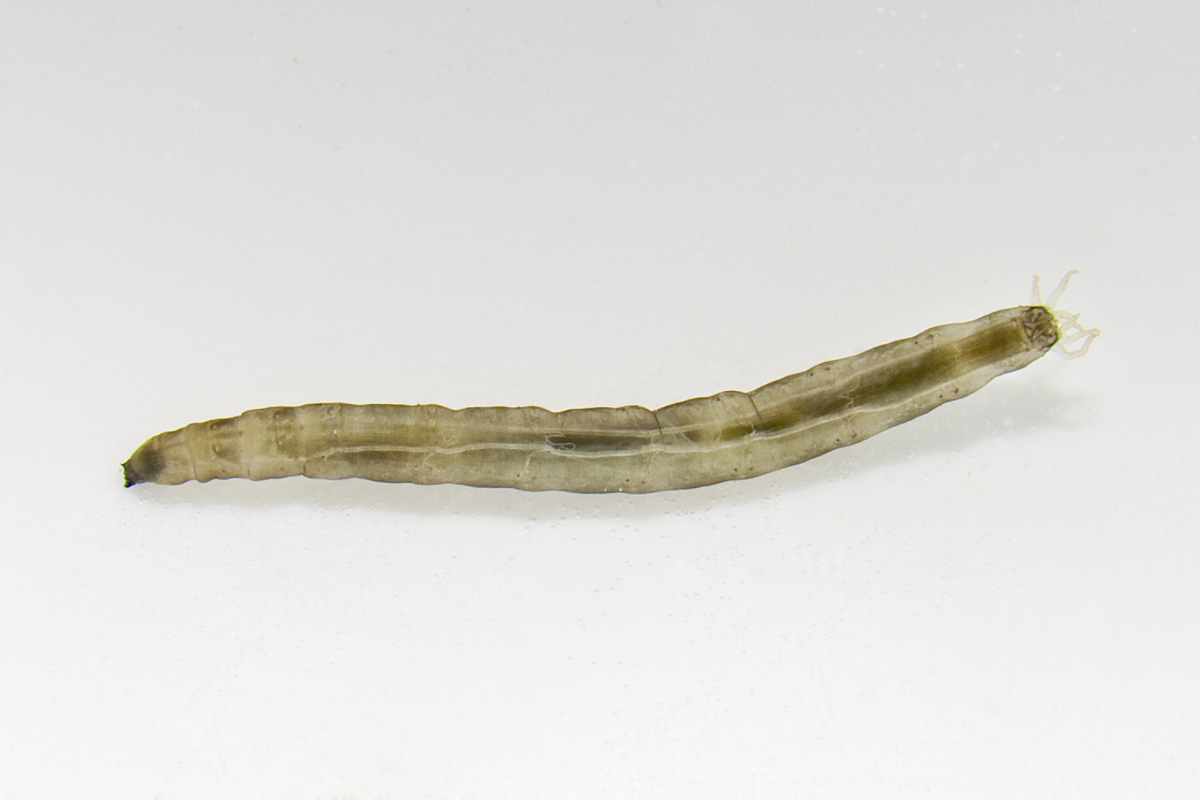

The larva is the one that matters: a fat, legless, olive-grey grub an inch or more long, living in bank margins and silt, washed out in numbers when the water comes up. Hooks run 6 to 10, the active band is 40 to 65 degrees across cold, cold-transitional and cool water, and the peak falls in April, May and June and again in September and October. A big, soft, olive grub bounced along the bottom is a serious early-season fly, and a swing after rain is when it earns the space in the box. The adult looks like an oversized mosquito, long-legged and awkward, a poor swimmer and a worse flier; blown onto the water on summer evenings it is occasionally worth a skated dry on small water. A Cranefly Larva in 6 to 10 or Pat's Rubber Legs in 4 to 10 carries the weight, with a Mop Fly or Walt's Worm behind them.
- #6–10Hook size
- 40–65°FWater, active
- Apr–Jun · Sep–OctPeak months
- 3Life stages fished
What it is
Other · Tipula spp. · larva → pupa → adult
The larva is a fat, legless, olive-grey grub, an inch or more long, living in bank margins and silt. The adult looks like an oversized mosquito and is a poor swimmer and a worse flier.
A big pale grub that washes out of undercut banks in high water. Worth a swing after rain.
When it hatches
The months below are this site's shared calendar, which covers 8 regions at once. In southeast Minnesota the state's own source says June–July, and the Minnesota page is built on that instead.
Peak is April–June and September–October. The pale months either side are the shoulder — the app widens a peak by one month in each direction and recommends the bug there, and no further: that widening is bounded so that a bug peaking in May is never offered in August.
peak shoulder not recommended
Water conditions
The band is a water temperature, not an air temperature, and it is the range in which this insect is worth fishing — for a mayfly that is the emergence window; for a scud or a midge it is simply the range trout will still eat one in.
Active from 40°F to 65°F. On this map that is cold, cold-transitional, cool water — the band crosses 2 of the three breaks the river colours use. Breaks at 58, 64 and 70°F.
Stages
What the insect is doing, and what that means for what you tie on.
| Stage | What it is |
|---|---|
| larva | The one that matters. High water washes them out of the banks in numbers, and a big, soft, olive grub bounced along the bottom is a serious early-season fly. |
| pupa | Present in the drift and taken by trout; this file carries no separate description of the stage. |
| adult | Long-legged and awkward, blown onto the water on summer evenings. Occasionally worth a skated dry on small water. |
Matching flies
6 patterns in this book imitate the Cranefly, across its stages. Which one to tie on follows the stage the water temperature says it is in — the app makes that call on a live reading; this page lists the whole set.
- Adult Cranefly dry fly · #10–16 — Long trailing legs, sparse hackle, skittered rather than drifted. Autumn and spring evenings on the bank side.
- Cranefly Larva nymph · #6–10 — A fat pale grub. Best in the day or two after high water.
- Mop Fly nymph · #10–14 — Divisive and effective. Suggests a cranefly larva more than anybody wants to admit.
- Pat's Rubber Legs nymph · #4–10 — Ugly, heavy, and the single best searching nymph in high or coloured water.
- Walt's Worm nymph · #12–18 — Dubbing on a hook. Suggests cranefly larvae, sowbugs and everything else pale and wriggling.
- Woolly Bugger (Olive) streamer · #2–12 — The clear-water version. Smaller and lighter than you think you need.
Where to find it right now
The rivers with a page here that sit in this insect's regions, with a USGS gauge reporting water temperature. This list is re-ranked against the reading each gauge is sending now and today's date, so it is live — the fallback below it, if the readings do not arrive, is each river's measured July mean.
- Smith River the Virginia mountains · July mean 51.9°F
- Ararat River the North Carolina mountains · July mean 49.9°F
- Back Creek the Virginia mountains · July mean 49.9°F
- Big Cherry Creek the Virginia mountains · July mean 49.9°F
- Big Ivy Creek the Virginia mountains · July mean 49.9°F
- Boothe Creek the Virginia mountains · July mean 49.9°F
- Brogan Branch the Virginia mountains · July mean 49.9°F
- Browns Dan River the Virginia mountains · July mean 49.9°F
- Brushy Fork the Virginia mountains · July mean 49.9°F
- Camp Creek the Virginia mountains · July mean 49.9°F
Regional presence
Regions, not collection records. This insect is recorded from the coarse regions below; nobody has surveyed which named river it has been caught on, and this page will not pretend otherwise.
- northern lower Michigan MI
- southern lower Michigan MI
- the Upper Peninsula MI
- the Wisconsin driftless WI
- northern Wisconsin WI
- the Virginia mountains VA
- the North Carolina mountains NC
- southeast Minnesota MN
Rivers in these regions with a page here
- Au Sable River
- Catawba River
- Jackson River
- Muskegon River
- Escanaba River
- Saint Croix River
- Smith River
- Tygart Valley River
- Kalamazoo River
- Aaron Creek
- Aaron Run
- Aarons Run
- Abb Run
- Abes Run
- Abitosse Creek
- Abram Creek
- Acme Creek
- Acorn Branch
- Adamcamp Branch
- Adams Creek
- Adams Creek
- Adamson Run
- Addis Creek
- Adkins Rockhouse Branch
- and 6470 more
Related hatches
Same family, or overlapping this one's calendar on the same water.
- Water Boatman Corixidae · Other · September–November
- Alderfly Sialis spp. · Other · May–June
- Fish Eggs Other · Other · October–January and April
- Aquatic Worm Oligochaeta · Other · all year
- Damselfly Zygoptera · Other · all year